
THE GAME PLAN METHOD™
Making a budget is only the beginning.
A budget can look great on paper. But then groceries cost more than you planned. The kids need something. An unexpected bill shows up.
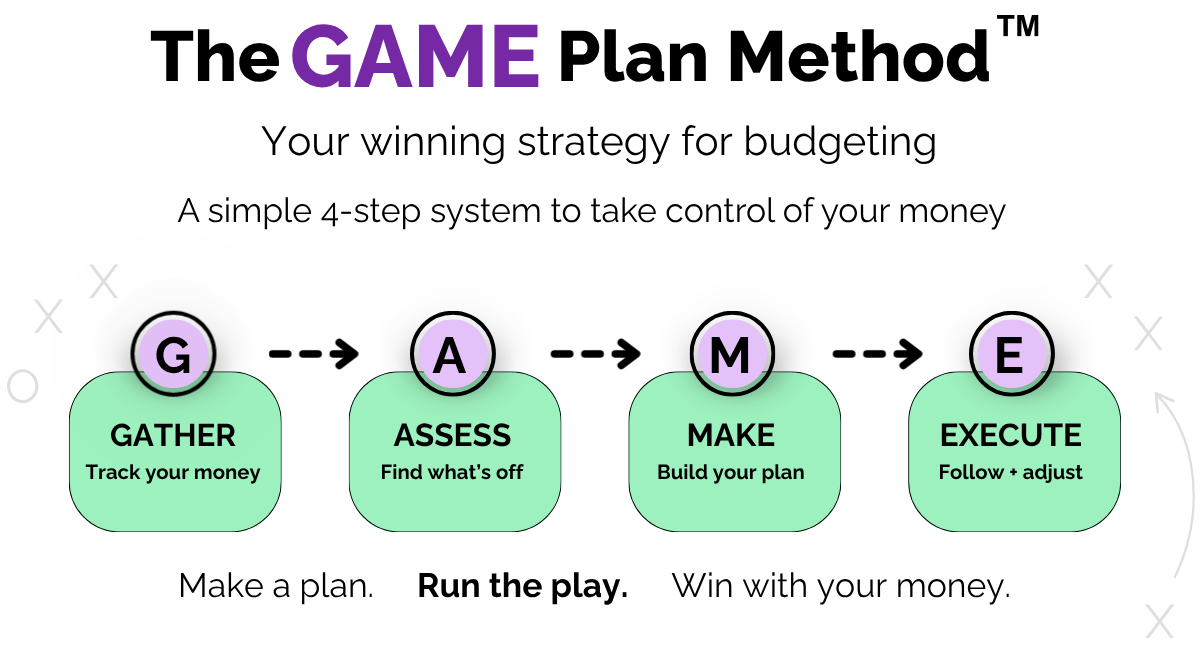
The GAME Plan Method™ gives you a simple way to know your numbers, make a plan for real life, and keep working that plan when life changes.
Make a plan. Run the play. Win with your money.
YOUR BUDGET ISN'T THE PROBLEM
A budget isn't something you make once.
It's something you learn to work.
Most budgets fail because they stop at "make the plan."
But real life doesn't sit still. Groceries cost more. Plans change. Somebody needs something. You overspend in one category. An unexpected expense shows up.
That doesn't mean the budget failed.
It means the plan needs to be worked.
The GAME Plan Method™ gives you a simple way to check in, see what's happening, and adjust before one off-plan week turns into giving up for the month.
Because real life is going to happen.
✓ The grocery bill comes in higher than you planned.
✓ The kids suddenly need something you didn't budget for.
✓ You spend more in one category than you meant to.
✓ An unexpected expense changes the plan.
✓ The month simply doesn't go the way you expected.
It's one you know how to adjust.
HERE'S HOW IT WORKS
Four simple steps. One GAME Plan you can keep using.
You don't make the plan once and hope for the best. You move through these four steps again and again as your money — and your life — changes.
STEP 1 — GATHER
Track your money. Stop guessing.
Gather the full picture of your money — income, bills, spending, and accounts. That includes tracking what you're actually spending instead of relying on what you think you spend.
You aren't trying to fix anything yet. You're gathering the information you need to see what's really happening.
This is how “I don't even know what I spend” turns into real numbers you can work with.
STEP 2 — ASSESS
Find where your money is going and what's off.
Now look at what you gathered. What's working? What surprised you? Where is more money going than you realized? What keeps throwing things off?
This is also where you look at your Core Four — Housing, Utilities, Transportation, and Groceries — and make sure the things your household needs most are accounted for.
No shame. No beating yourself up over what already happened. You're using the numbers to decide what needs to change next.
Gather gives you the numbers. Assess tells you what those numbers are saying.
STEP 3 — MAKE THE PLAN
Build a simple, realistic budget.
Now you can make the plan.
Use what you learned in Gather and Assess to decide what your money needs to do next. Cover your needs, make room for real-life spending, and build the budget around the money and life you actually have.
This isn't about squeezing yourself into somebody else's perfect budget. It's about creating a plan you can actually use.
Your budget should fit your real life — not the other way around.
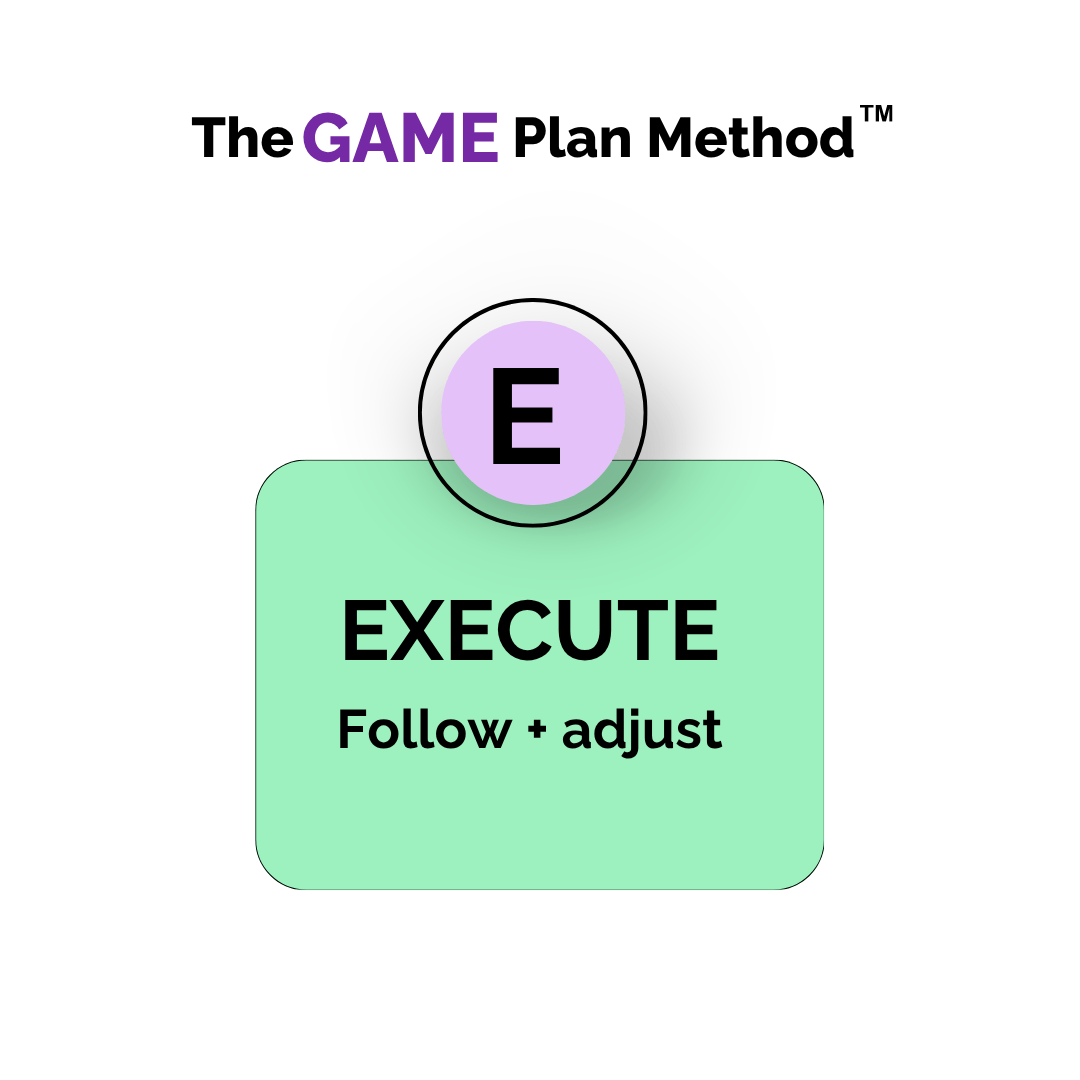
STEP 4 — EXECUTE
Follow the plan and adjust as needed.
This is where budgeting actually happens.
Put the plan into action. Keep tracking. Check in with your numbers. Compare what you planned with what's actually happening and make adjustments as you go.
If groceries run high, an unexpected expense pops up, or life simply doesn't go according to plan, you don't throw the budget away. You adjust it and keep moving.
Adjusting the plan isn't failing. It's working the plan.
Then you do it again.
GATHER → ASSESS → MAKE THE PLAN → EXECUTE
Your money changes. Your priorities change. Life changes. So you keep running the GAME Plan instead of starting over every time something doesn't go perfectly.
BUDGETING SHOULD WORK FOR YOUR LIFE
A good budget gives you a plan.
Not a bunch of rules to follow.
Fun belongs in the budget.
You shouldn't have to cut out everything you enjoy just to be “good” with money.
Adjusting isn't failing.
When life changes, your budget should change with it.
You don't have to get it perfect.
A budget is something you work, not something you pass or fail.
You can learn to trust yourself with money.
The goal isn't to depend on someone else forever. It's to know what to do when real life happens.